Today we have a very special episode in which we are going to talk about the Colombian Guajira, with Paula Forero.
La Guajira is a land of contrasts between the golden desert and the infinite blue of the Caribbean; where the Wayúu culture flourishes in its arid landscapes; the ranches are intertwined with ancestral history and the chinchorros rock dreams under the bright starry sky.
Between dunes and sea, vallenato singer-songwriters weave melodies that narrate the Guajira life, where land and soul merge in each chord. The guajiros, proud guardians of their land, tell stories of resistance and resilience that cross generations.
At Go and Travel, we are proud to connect with you through local hosts like Paula, to inspire you to make Colombia your next vacation destination. We have prepared a 16 day route through Colombia and La Guajira, for more information click here. 👈🏼
Brief introduction to the history of La Guajira
La Guajira is a peninsula located in the extreme north of Colombia, in the Caribbean region. It is bordered to the north and west by the Caribbean Sea, to the east by Venezuela and to the south by the department of Cesar. It is known for its desert landscapes, the Wayúu indigenous culture and its natural resources, such as the Cerrejón coal mines.
Originally inhabited by the Wayúu Indians, these lands have witnessed a cultural mix since the time of Spanish colonization in the 16th century.
La Guajira was the scene of important historical events, such as the founding of Riohacha in 1535 and the presence of corsairs and pirates who sailed its coasts. Throughout the centuries, the region has maintained its essence and traditions, preserving the Wayúu language, art and customs.
Today, La Guajira stands out for its natural and cultural diversity, offering dazzling landscapes such as the desert of Punta Gallinas, the beaches of Cabo de la Vela and the salt flats of Manaure.
We suggest a route for your trip to Guajira
Day 1: Riohacha
The capital of La Guajira is your gateway. You can stroll along the Malecon, enjoy the beach and sample the local cuisine. Visit the Mercado de Artesanías, where you can buy Wayúu backpacks and other typical handicrafts. When dining at a local restaurant, try traditional dishes such as roasted goat and friche.
Day 2: Cabo de la Vela
A drive of approximately 3-4 hours from Riohacha. At Ojo de Agua Beach, relax on this quiet beach with crystal clear waters. At Pilon de Azucar, you can climb this hill for panoramic views and enjoy the nearby beach. At sunset go to the lighthouse, don't miss the spectacular sunset from the Cabo de la Vela lighthouse.
Day 3: Punta Gallinas
The northernmost tip of South America, a journey that can take about 4-5 hours from Cabo de la Vela. At Taroa Dunes, slide down these huge dunes and enjoy the view of the Caribbean Sea. In Hondita Bay, contemplate a stunning landscape of mangroves and calm waters. Enjoy the sunset at Punta Gallina Lighthouse.
Day 4: Uribia and Manaure
Known as the "Indigenous Capital of Colombia", Uribia is a place to learn more about the Wayúu culture. Salinas de Manaure: Visit these impressive salt mines and learn about the salt production process.
Day 5: Macuira National Natural Park
Excursion to the Macuira: An oasis in the middle of the desert, with lush vegetation and biodiversity. Hiking and Wildlife Watching: Explore the trails of the park and observe birds and other local species.
Day 6: Wayúu Rancherías
Visit a Wayúu Rancheria: Immerse yourself in Wayúu life and traditions. Participate in cultural activities, learn about their handicrafts and enjoy a traditional meal. Farewell in Riohacha: Return to Riohacha to end your trip. You can take the opportunity to buy souvenirs and enjoy a last local dinner.

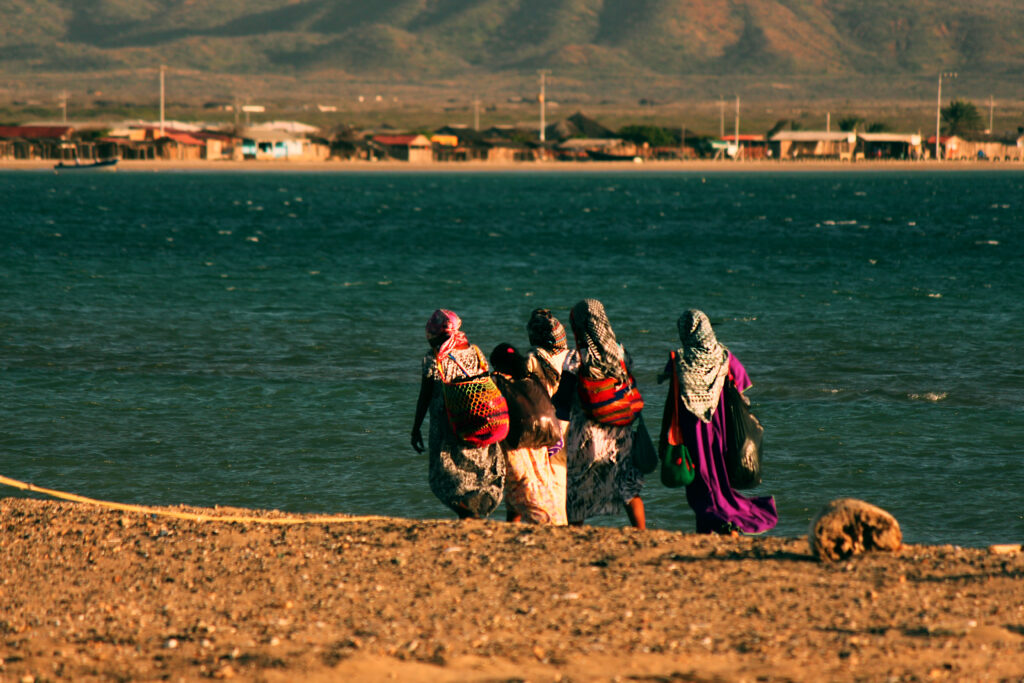
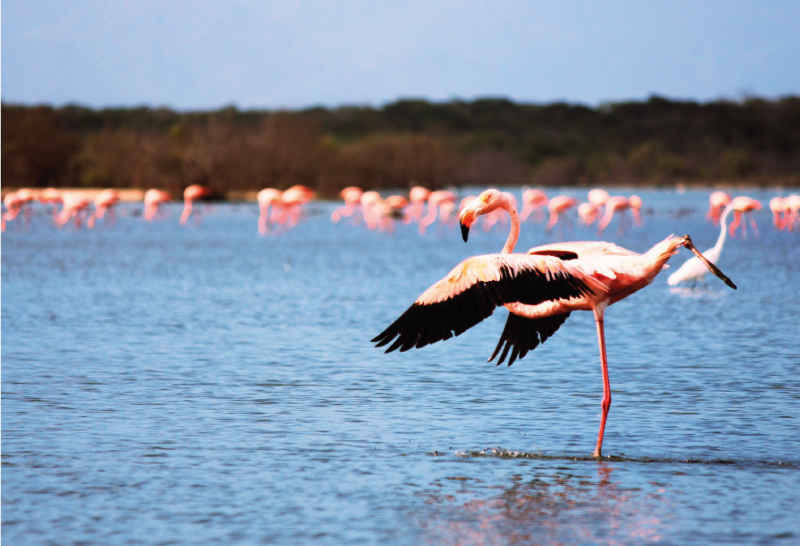
Indigenous Guajira
La Guajira is predominantly inhabited by the Wayúu indigenous people, who have maintained their traditions and customs over the centuries. The Wayúu are known for their rich culture and resilience in one of Colombia's most arid environments.
They are organized in matrilineal clans, where descent and inheritance are transmitted through the maternal line. Each clan has an "Eirruku" (totem) that identifies it. They speak Wayuunaiki, a language of the Arawak family. This language is a fundamental pillar of their identity and is taught from childhood.
Traditionally, the Wayúu are goat and sheep herders, although they also practice fishing and handicrafts. Their backpacks and colorful weavings are highly prized and are part of their cultural heritage. Ceremonies and rituals are a vital part of Wayúu life. Their celebrations of life and death stand out, with elaborate funeral rituals.
Dance and music are also essential, especially during festivities and community events. Wayúu women often wear colorful "molas", while men wear "guayucos" and "mantas". These costumes are not only functional, but also an expression of their cultural identity.
If you want Paula to be your guide to discover these places and many more, click here for more information. 👈🏼 🇨🇴
2.- LA Guajira as a film and music scenario.
La Guajira, with its dazzling diversity of landscapes and rich cultural heritage, has become an attractive backdrop for filmmaking. The following films, among others, have been shot here:
- Los viajes del viento, this feature film captures the essence of this region, revealing the magic of a place where culture and nature dance to the beat of time, between struggles and hopes, in an eternal back-and-forth of traditions and dreams.
- Pájaros de verano, set in La Guajira during the 1970s and 1980s, tells the story of a Wayúu family that becomes involved in the drug trafficking business.
- We Women Warriors, a documentary that follows three indigenous Colombian women, including a Wayúu leader, as they fight for justice and peace in their communities affected by the armed conflict.
The music mixes indigenous tradition with African and European influences:
Musical Genres:
- Vallenato: Although originating in the neighboring department of Cesar, vallenato has a strong presence in La Guajira. Instruments such as the accordion, the caja and the guacharaca are fundamental to this genre, which tells stories of love, legends and daily life.
- Wayúu Games and Songs: The Wayúu community has its own musical expressions, which include traditional songs used in rituals and celebrations. The songs can be narrative, telling ancestral and mythological stories.
Traditional Instruments:
- Kasha: A traditional Wayúu drum used in ceremonies.
- Accordion: Main accordion in Vallenata music, introduced by the European colonizers but adapted to local styles.
Musical Festivities:
- Cuna de Acordeones Festival: Held in Villanueva, La Guajira, this festival is one of the most important events for vallenato, where the best musicians of the genre gather.
- Wayúu celebrations: During Wayúu festivities, music and dance play a central role, with events that can last several days and nights.
Listen to the episode and subscribe to the Podcast "En Colombia te estamos esperando" here: